
Who is AI-powered machine vision for?
This chain runs from optics and lighting to deep learning models, all the way to communication with the PLC, the MES or the ERP. It is aimed at manufacturers automating an inspection or a robotic pick on their lines, as well as machine builders and integrators embedding a vision component in their equipment, in project mode or with our Python SDK.
Choose your field of application
Psycle expertise
Industrial quality control with vision
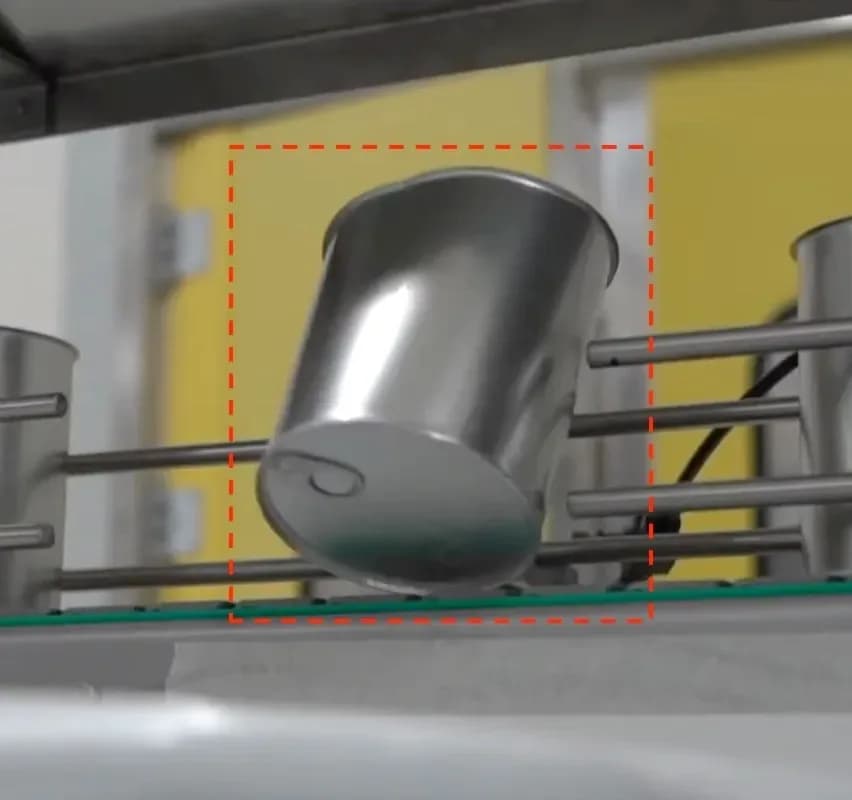
Every product that passes in front of the camera is analyzed, judged compliant or not, and ejected if necessary. Cosmetic defects, seams, label conformity, fill level, lidding: AI vision keeps pace with the line where human inspection cannot be exhaustive.
Psycle expertise
Robot guidance with 3D vision
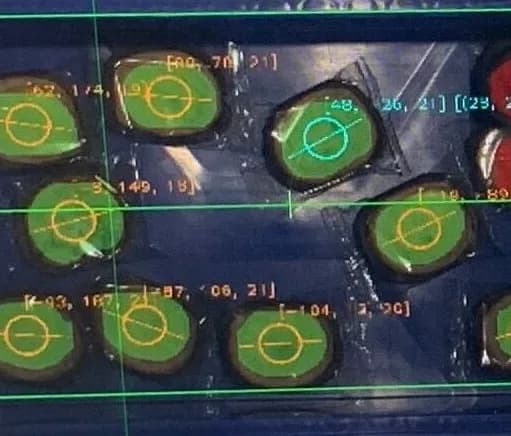
The camera calculates the position and orientation of the part, then sends the pick coordinates to the robot controller. Bin picking, pick & place, depalletizing: the robot handles loose products and variable formats with no manual rework or dedicated jig.
Quality control or robot guidance: what's the difference?
| Quality control | Robot guidance | |
|---|---|---|
| Typical use cases | Detection of seam defects on cans, label conformity, fill level, lidding inspection | 3D bin picking, depalletizing, part positioning, on-board multi-face inspection |
| What vision does | Decides on the conformity of each product and triggers ejection | Calculates the position and orientation of the part, sent to the robot controller |
| Expected benefit | 100% product inspection, traceability of non-conformities, fewer rejects and customer returns | A robot able to handle loose products and variable formats, shorter cycle time, less manual rework |
| Dominant technology | 2D, high speed, AI generalization | 3D, point cloud interpretation, PLC servo control |
| Sectors | Food, cosmetics, nuclear, electronics | Food, logistics, waste sorting |